
Person County Court Records After Arrest
After an arrest in Person County, the first record may be a jail booking, a police arrest entry, or paperwork from a magistrate. That first custody record is not the final court record. The formal case develops through the North Carolina Judicial Branch once charges are filed and scheduled. Person County criminal cases are handled through District 11 court districts, and the local courthouse is the place for clerk access, public terminals, paper files, certified checks, and case routing.
For custody and booking details, use the Person County jail inmate records path first. For booking photos, use the Person County jail mugshots page. The court record has a different job. It shows the case number, filed charges, court dates, status changes, and disposition. A Roxboro P2C arrest entry may show the arrest charge, but it does not prove the person is still in jail or that the charge stayed the same after prosecutor review.
The Judicial Branch Person County page is the county-level court hub. It links to court dates, forms, jury service, and local court information. The official page is a good starting point when eCourts results are thin or when a person needs the clerk rather than a web search.
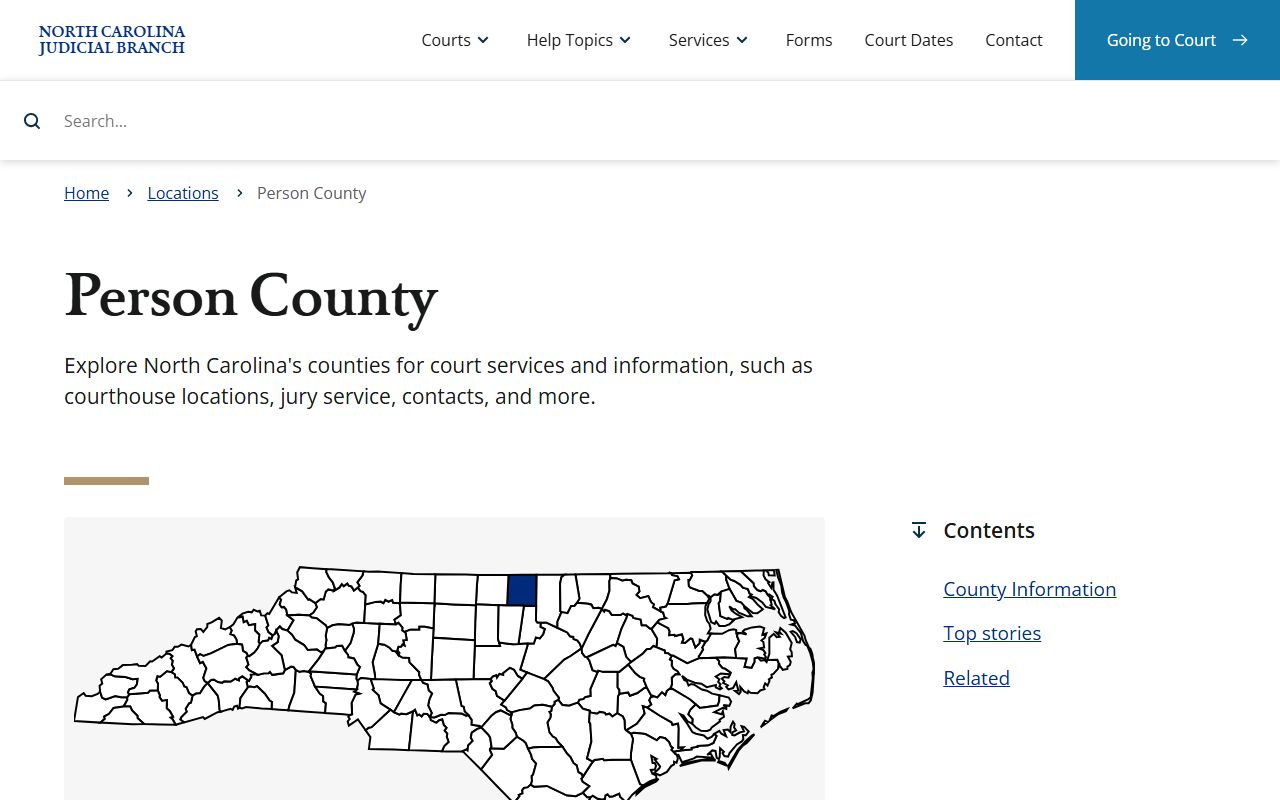
That county court page helps separate court business from jail business, which matters because Person County does not publish a live county jail roster online.
Find Person County Court Records
The main online route is the North Carolina eCourts Portal. Smart Search can be used for case information, while Search Hearings is built for court dates and hearing calendars. Browser access can require JavaScript, cookies, and periodic verification, so a failed web search does not always mean no case exists. Public self-service terminals at a clerk of court office can search criminal cases by defendant name, case number, or victim and witness name.
- Gather the full name, approximate arrest date, arresting agency, and any case number, SO number, booking number, or charge text from the arrest paperwork.
- Open eCourts Smart Search and enter a record number or a name in last, first, middle, suffix order when using the main box.
- Expand Advanced Filtering Options and choose Person County as the location to cut down matches from other North Carolina counties.
- Open the case result and read each charge line, case status, event, hearing, and disposition field before treating the record as final.
- Use Search Hearings when the goal is a next court date rather than a full case history.
The Judicial Branch court-record instructions also point people to courthouse terminals, Portal, and clerk paper files. For a certified single-county criminal background check, the Judicial Branch says to use form AOC-CR-314 through the clerk with a $25 fee. That background check process is different from a casual Portal search and is better for certified county court results.
The state eCourts landing page shows Smart Search, Search Hearings, payments, and judgment search tools in one portal.
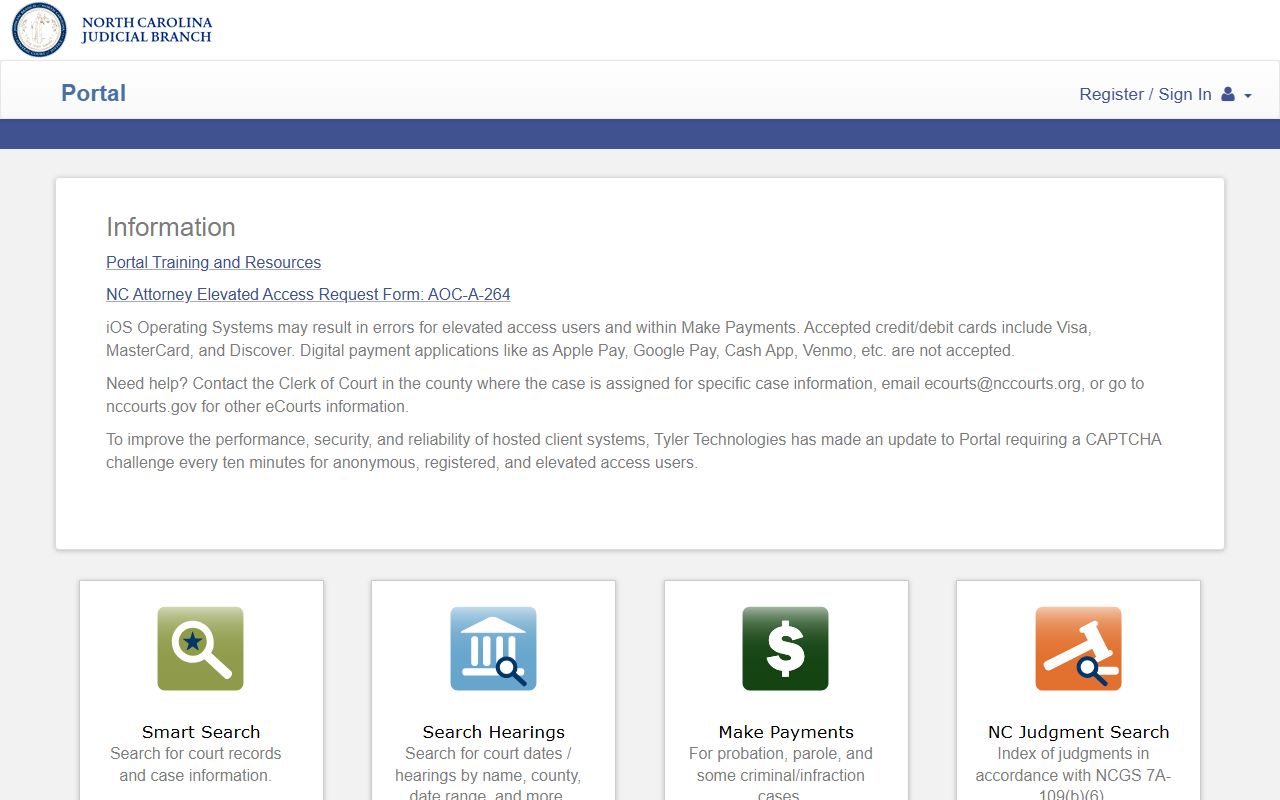
Use the portal for filed case information, then use the courthouse when certified, older, paper, or unclear records are needed.
Person County eCourts Search Fields
Smart Search has both a simple search box and advanced filters. The most useful Person County filter is location, because common names can return cases from many counties. If arrest paperwork has a booking number, SO number, FBI number, or case number, those fields can narrow the search further.
| Field | Use | Notes |
|---|---|---|
| Smart Search main box | Name or record number | Use Last, First Middle Suffix format for name searches. |
| Filter by Location | County filter | Select Person County to reduce statewide false matches. |
| Last / First / Middle Name | Party search | Last name is the key field for party-name filtering. |
| Date of Birth From / To | Identity filter | Useful when several people share a similar name. |
| SO Number / Booking Number | Arrest-linked identifiers | Use when jail or law-enforcement paperwork provides them. |
| Case Type / Case Status | Case filters | Helps separate pending, disposed, and other case categories. |
| File Date Start / End | Date range | Useful when the arrest date is known but the case number is not. |
Search Hearings is a separate eCourts tool for upcoming settings. It is useful after a Person County jail arrest because a court date may matter more than a full case file during the first days after booking. If a hearing is not found online, call the courthouse or check with the clerk during business hours.
Person County Courthouse Records
The Person County Courthouse is at 105 S. Main St., Roxboro, NC 27573. The main phone number is 336-503-5200, and published hours are Monday through Friday, 8:30 a.m. to 5:00 p.m. The courthouse is near the sheriff's office and detention center, but it serves a different role. Jail staff handle custody and bond stipulation questions. The clerk and public terminals handle court records, case files, copies, and certified criminal background checks.
Person County Courthouse
105 S. Main St.
Roxboro, NC 27573
Phone: 336-503-5200
Hours: Monday-Friday, 8:30 a.m.-5:00 p.m.
The official Person County Courthouse page lists the local address, phone, and business hours.
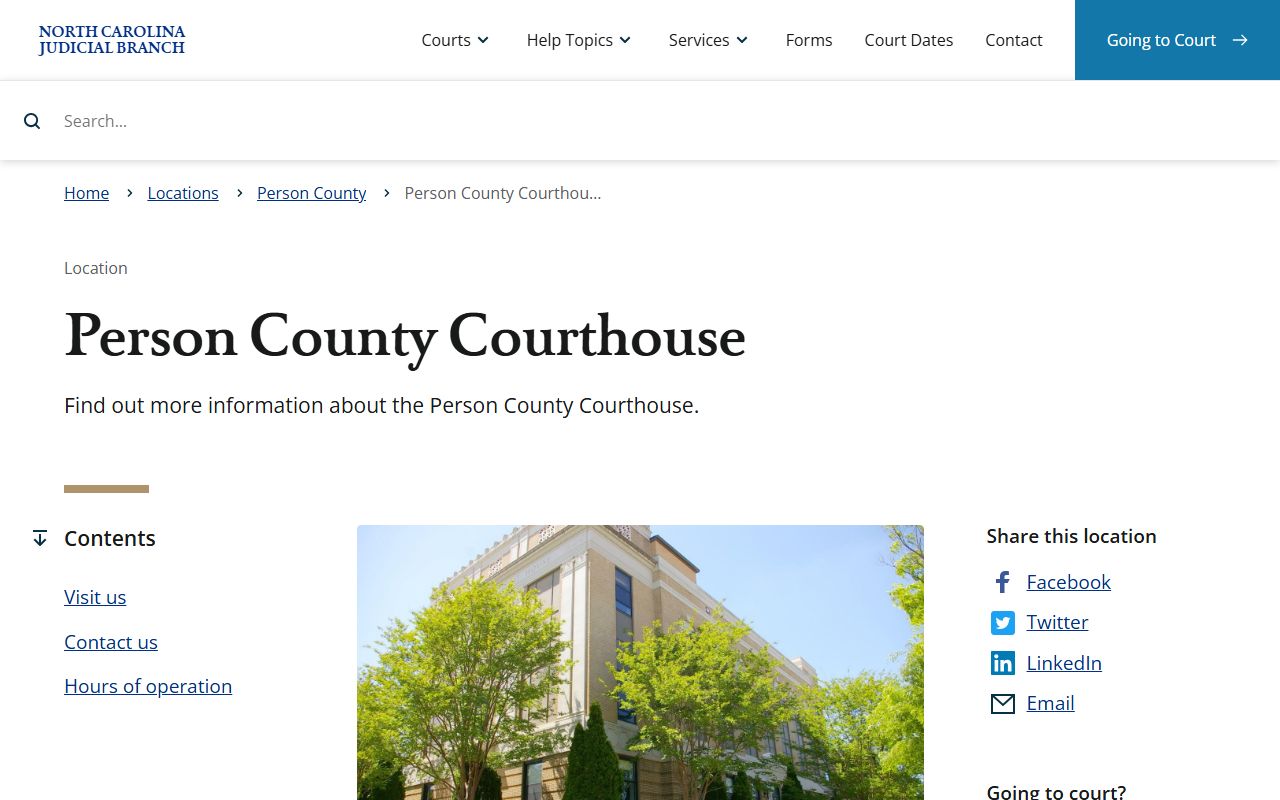
That courthouse information is the practical fallback when eCourts does not answer a case-specific question after an arrest.
Charges Filed After Arrest
Charges after a Person County arrest can begin with law-enforcement paperwork, a warrant, a citation, or a magistrate process. The District Attorney then reviews and prosecutes criminal matters for the State of North Carolina. A court charge can be different from the booking charge because review may lead to an amended offense, a reduced charge, an added charge, a dismissal, or a later indictment in Superior Court.
| Document | Who Uses It | How It Fits the Court Record |
|---|---|---|
| Complaint or citation | Law enforcement or charging official | Often starts a misdemeanor, traffic, or lower-level criminal case after arrest or citation. |
| Criminal information | Prosecutor | May set out charges the prosecutor files or maintains after review. |
| Indictment | Grand jury | Common in serious felony cases and can replace or supersede earlier charge language. |
These document names can vary by case posture and court level. The key point is simple: the arrest starts custody, but the charging document gives the court record its formal charge path. Serious felony cases may begin in District Court for early events and later move through Superior Court after indictment.
Person County Charge Status
A charge status tells where the court record stands. It should not be read as a full story by itself. A pending charge is unresolved. A dismissal ends the charge without a conviction. A conviction follows a guilty plea, verdict, or judgment. A continuance moves a hearing to another date. Failure to appear can trigger an order for arrest or another warrant, which may lead back to booking at the Person County Detention Center.
| Status | Meaning | Practical Check |
|---|---|---|
| Pending | The charge or case has not reached final disposition. | Check Search Hearings for the next date. |
| Amended or reduced | The offense was changed by prosecutor action or court order. | Compare the court charge with the arrest charge. |
| Dismissed | The charge ended without a conviction on that charge. | Ask the clerk about certified disposition copies. |
| Convicted or guilty | Judgment was entered after plea or trial. | Look for sentence, probation, costs, or transfer information. |
| Continued | A hearing was moved to a later date. | Confirm the new date before assuming delay means dismissal. |
| Failure to appear | The defendant missed court and may face an order for arrest. | Contact the clerk or counsel before trying to resolve it. |
Bond After Person County Arrest
Bond is part of the early custody and court pathway. Person County publishes three bond options for people held at the Person County Detention Center: a bail bondsman, cash bond, or property bond. The county states that a bondsman's fee is 10-15% of the bond amount. Property used for a property bond must be in Person County, and a property bond greater than $19,999 requires contact with the Clerk of Court Office. For current bond stipulations, the jail phone number is 336-597-0525.
| Bond Type | How It Works | Person County Detail |
|---|---|---|
| Cash bond | The full cash amount is posted under court rules. | Confirm accepted payment method and location before going. |
| Surety bond | A licensed bondsman posts the bond for a fee. | Person County says bondsman fees are 10-15% of the bond amount. |
| Property bond | Real property secures the bond. | Property must be in Person County; over $19,999 requires clerk contact. |
| PR or unsecured release | The court releases the person on promise and conditions. | Check the court order because the county jail page does not list this as a posted option. |
| No-bond hold | Release is blocked until a court or hold changes. | May involve another warrant, agency hold, probation issue, or court order. |
Bond release can still take time after payment or paperwork. Jail processing, another agency hold, a warrant, or a new court condition can keep someone in custody. That is why the jail handles the custody question while the courthouse handles the case-record question.
District Attorney Review
Person County is in Prosecutorial District 11. District Attorney Mike Waters represents the State in criminal and some juvenile matters in Person, Franklin, Granville, Vance, and Warren counties. The district office phone is 919-690-4860, and the district address is Granville County Courthouse, 101 Main Street, Oxford, NC 27565. The DA prepares criminal trial dockets, prosecutes criminal cases, and advises law enforcement, but the DA's office does not give legal advice to defendants.
The official Prosecutorial District 11 page identifies the district, the District Attorney, the counties served, and the district office contact information.
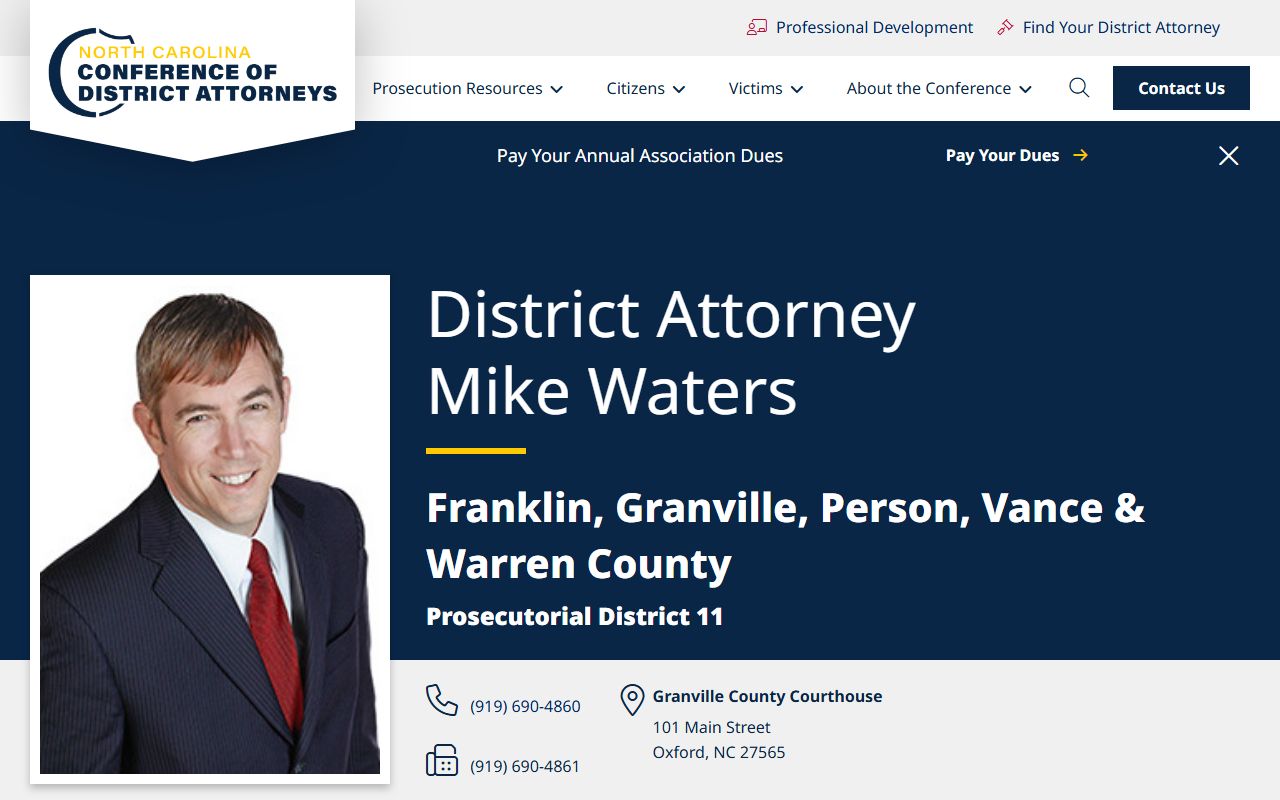
That prosecutor role explains why filed court charges may not match the arrest charge word for word.
Warrants and Arrest Records
No official Person County active warrant search portal was located in the research. A warrant lookup therefore needs a careful fallback chain. If a warrant has already led to arrest, call the Person County Detention Center for current custody and bond stipulations. If the issue is a court case, call or visit the Person County Courthouse and use eCourts Smart Search or Search Hearings. If the arrest was by Roxboro Police, the P2C Recent Arrests page or Daily Bulletin may show arrest or event context, but those feeds are not county custody records.
- Arrest warrant
- A court or judicial official directs law enforcement to arrest a person on an alleged offense.
- Bench warrant or order for arrest
- A court order often tied to failure to appear or failure to comply with court conditions.
- Search warrant
- A warrant for a place, person, or item search. It is not the same as a warrant to arrest.
- Detainer
- A hold from another agency or jurisdiction that may delay release from the local jail.
Do not rely on unofficial warrant websites to decide whether to appear in court or go to the sheriff's office. If arrest is possible, contact counsel or the clerk for case-specific next steps.
Charges vs Convictions
An arrest and charge are accusations, not proof that the person committed the offense. A conviction is different. It follows a guilty plea, verdict, or judgment. This distinction matters when reading Person County court records after arrest because early entries often show allegations that later change or end without conviction.
| Point of Comparison | Charge | Conviction |
|---|---|---|
| Stage | Accusation after arrest, warrant, citation, or prosecutor filing. | Final or partial case outcome after plea, trial, or judgment. |
| Proof level | Based on probable cause or charging decision. | Requires guilty plea, verdict, or legal finding beyond the accusation stage. |
| Can change? | Yes. It may be amended, reduced, added, or dismissed. | Changes usually require court action, appeal, correction, or later relief. |
| Record meaning | Shows what was alleged in the court case. | Shows legal responsibility entered by the court. |
Sealed and Expunged Records
North Carolina expunction is the process for removing or sealing eligible criminal records. The Judicial Branch explains that eligibility depends on the charge, outcome, prior record, waiting periods, and the statute used. Some dismissed or not-guilty matters may qualify, but eligibility is not automatic. A person seeking expunction normally files in the court where the charge occurred.
| Issue | Sealed | Expunged |
|---|---|---|
| Public visibility | Hidden from routine public access. | Removed or treated as cleared under the expunction order. |
| Record handling | May still exist for limited official use. | State sources must follow the court's expunction process. |
| Eligibility | Depends on court rule or statute. | Depends on North Carolina expunction statutes, including dismissed or not-guilty paths. |
| Private websites | May not update unless notified. | May not disappear from private sources without separate requests. |
North Carolina public records law starts with G.S. 132-1, while G.S. 132-1.4 protects some criminal investigation and intelligence records. The Judicial Branch expunction help topic is the right public starting point for cleanup of eligible arrest, charge, or conviction records.
Restricted Person County Court Records
Some records after an arrest may not be open in full. Juvenile matters, sealed files, expunged cases, protected victim information, and active investigative material can be withheld or redacted. Complete police reports may also be outside routine public access unless discovery or another rule applies. Public access is strongest for filed court records, public terminal case information, arrest information required by law, and non-exempt public records requested from the correct custodian.
The court-records help topic explains that paper files are accessed through the clerk in the county where the case is located and copies may involve fees.
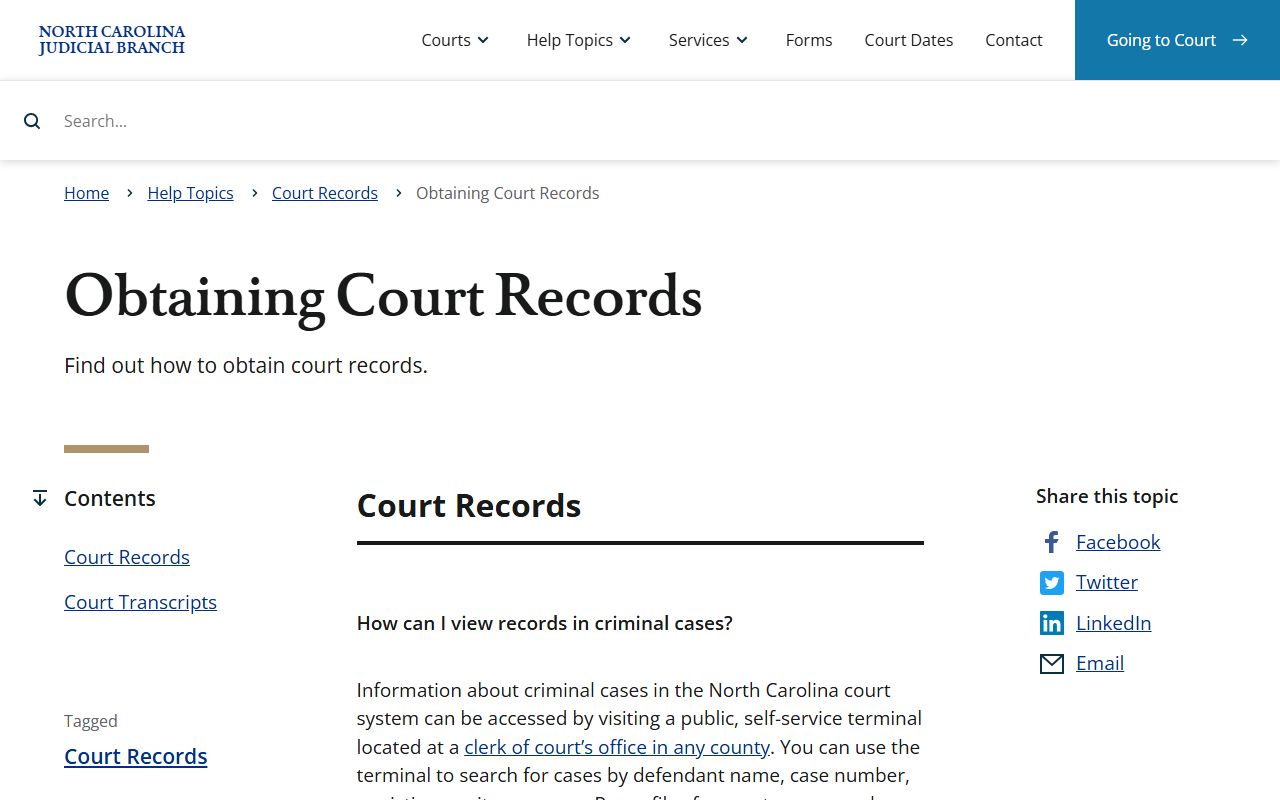
That official court-record guidance is the better source when the issue is a court file, not a sheriff booking record.
Important: Person County Inmate Population is not a consumer reporting agency, and site information may not be used for FCRA-regulated decisions.
Public Record Search
Sponsored Results